
Currently Empty: $0.00
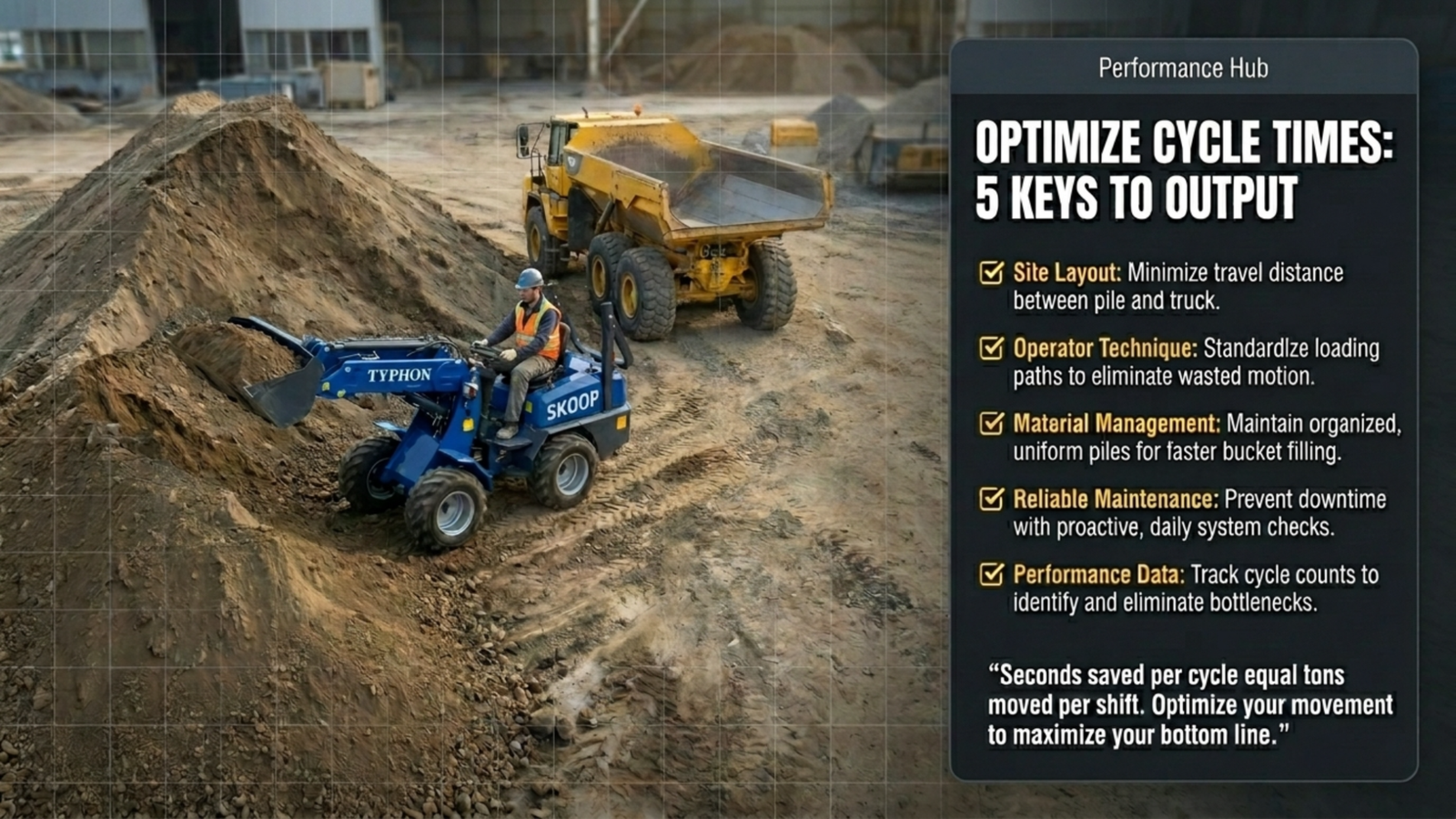
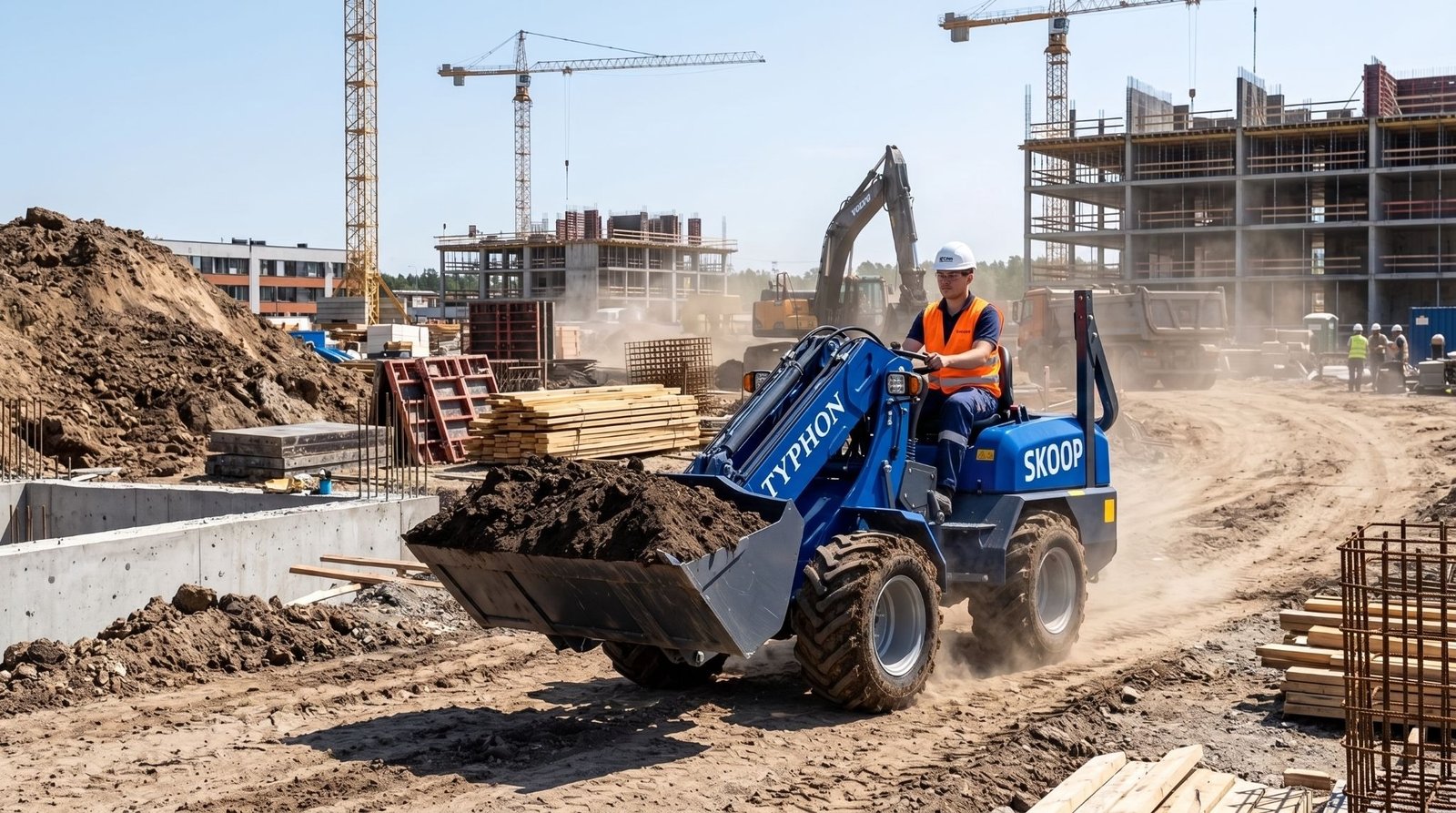
Every load your wheel loader moves represents a cycle, and the time each cycle takes adds up fast across a shift. Shave a few seconds here and eliminate a bit of wasted motion there, and you finish more work with the same machine, the same fuel, and the same operator. Cycle time is one of the most powerful levers you have for boosting daily output, yet it often gets overlooked in favor of bigger, more expensive changes. The truth is that smarter site layout, consistent technique, well-managed material, reliable maintenance, and good data can transform your productivity without a single new machine. This guide walks through five practical ways to tighten your cycle times and get more from every hour your loader runs. Whether you manage one machine or a full fleet, these strategies help you work faster, safer, and more efficiently.
Streamline Your Job Site Layout
The single biggest factor in your loader’s cycle time is often the distance it travels between the pile and the truck. Every foot the machine covers empty or loaded is time spent not filling buckets, and that travel adds up dramatically across hundreds of cycles in a shift. Organizing your site so the loader follows a short, efficient path minimizes this travel time and directly increases how many loads you complete before the day ends. A well-planned layout is one of the cheapest, fastest ways to lift output, because it costs nothing but thought and a little repositioning.
Start by positioning trucks as close to the material as safe operation allows, and set up loading zones that let the loader work in a tight, repeatable pattern rather than a long back-and-forth haul. The goal is to keep the machine turning and loading rather than driving. A short travel path also reduces fuel burn, tire wear, and operator fatigue, so the benefits reach well beyond raw speed.
Consider these layout principles that keep cycles short:
- Position the truck at an angle to the pile so the loader turns less and travels less
- Keep loading zones clear of obstacles that force detours or slow maneuvering
- Plan traffic flow so loaded and empty machines never block one another
- Reposition trucks as the pile shrinks to maintain the shortest practical path
Take a few minutes at the start of each job to think through the layout rather than defaulting to whatever is convenient. A deliberate setup pays back that time many times over across a shift, keeping your loader productive and your daily output climbing without any additional cost.
Standardize Loading Techniques
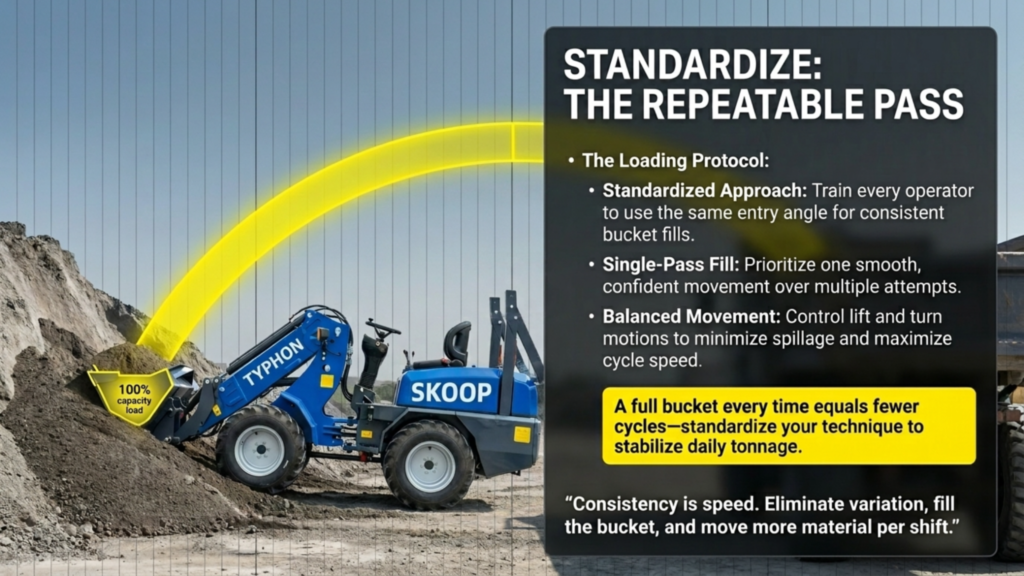
How an operator fills the bucket has an enormous effect on both cycle time and the amount of material moved per pass. When every operator approaches the pile differently, cycle times vary wildly, buckets come up partly full, and output becomes unpredictable. Standardizing loading techniques across your team ensures maximum bucket fill on every cycle and brings consistency that stabilizes productivity. A full bucket every time means fewer cycles to move the same tonnage, which is one of the most direct ways to raise daily output.
The most effective operators follow a repeatable process built on proven fundamentals. Consistent approach angles let the bucket enter the material cleanly and fill completely without excessive force. Steady lift heights and smooth breakout motions reduce spillage and keep the machine balanced through the turn. When these habits become the standard rather than the exception, cycle consistency improves and you can predict your output with far more confidence. Erratic technique, by contrast, wastes time on partial loads and forces the machine to work harder than it should.
Getting there takes training and reinforcement. Document the best-practice loading pattern your top operators use, then coach the rest of the team to match it. Encourage a clean, confident approach to the pile, a full bucket in a single smooth pass, and a controlled lift and turn toward the truck. Watch for operators who crowd the pile or lift too high, and correct those habits before they become ingrained. When every operator loads the same efficient way, you eliminate the variation that quietly drags down your numbers. The result is faster, steadier cycles, fuller buckets, and a fleet that performs reliably no matter who sits in the seat.
Optimize Material Management
The condition of your stockpile has a direct impact on how quickly and easily the loader fills its bucket. A well-maintained pile face lets the bucket dig in cleanly and come up full with minimal effort, while a neglected pile forces the operator to fight for every load. Keeping stockpile faces properly shaped and preventing the buildup of large, awkward mounds helps operators fill buckets faster and with far less struggle. Efficient material handling means the loader is not wasting time and force wrestling stubborn material that should flow easily into the bucket.
When a pile is loose, evenly graded, and presented at a workable angle, the bucket penetrates smoothly and fills in a single confident pass. When material is compacted, piled too steeply, or left in oversized mounds, the machine has to work much harder to break out the load. That extra effort slows the cycle, strains the engine and hydraulics, and burns more fuel for every bucket. Keeping the pile in good shape lets the loader move fluidly, holds engine strain down, and protects both cycle speed and the machine itself.
Good material management is an ongoing task, not a one-time setup. Have a plan for how material gets delivered and stacked, and keep the working face maintained as the pile shrinks throughout the day. Break down large mounds before they force operators into difficult digs, and keep the base clean so the bucket can scoop the last of the material without scraping and struggling. When you treat the stockpile as part of your productivity system rather than just a pile of material, you remove one of the hidden obstacles that slows cycles. A well-managed pile keeps your loader moving smoothly and your output consistent from the first load to the last.
Prioritize Routine Preventive Maintenance
A wheel loader running at peak mechanical health is simply faster and more responsive than one nursing hidden problems. Lagging hydraulics, a strained engine, or underinflated tires all steal precious seconds from every cycle, and those seconds compound into significant lost output over a shift. Preventive maintenance keeps the machine performing the way it was built to, and it protects you from the unexpected breakdowns that halt work entirely. A reliable machine is a productive machine, and consistent upkeep is what keeps it reliable.
Hydraulics deserve close attention because they drive the lift, tilt, and breakout actions at the heart of every cycle. Sluggish hydraulics slow bucket movement and drag out each load, so keeping fluid at the correct level and in good condition matters directly to cycle speed. Clean filters, healthy fluid, and a smoothly running engine keep the machine crisp and responsive. Tire pressure plays a role too, since underinflated or worn tires reduce traction, waste power, and slow both travel and loading. A few simple checks catch most of these issues before they cost you.
Build a consistent maintenance routine and stick to it rather than waiting for problems to surface. Check fluid levels, filters, and tire pressure regularly, and address small issues before they grow into sluggish performance or downtime. Keep clear service records so nothing gets missed, and train operators to report changes in how the machine feels, since they are often the first to notice a developing fault. The cost of routine maintenance is small compared to the lost output of a slow or sidelined machine. When your loader stays in top mechanical shape, it works faster, responds better, and keeps your daily production flowing without interruption.
Utilize Real-Time Performance Monitoring
You cannot improve what you do not measure, and modern telematics give you a clear window into how your loader actually performs throughout the day. Onboard monitoring systems track valuable data like idle time, cycle speeds, fuel use, and operating hours, letting you see exactly where time is being lost. Instead of guessing at your inefficiencies, you can pinpoint the specific bottlenecks that hold your operation back and act on real information. This visibility turns cycle time optimization from a matter of intuition into a matter of data.
Idle time is one of the most revealing figures telematics can show you. A machine sitting idle burns fuel and logs hours while accomplishing nothing, and the data often reveals far more idling than anyone expected. Tracking cycle speeds shows you which parts of the operation run smoothly and which drag, while comparing performance across operators highlights where training could tighten up results. When you can see the numbers clearly, the path to improvement becomes obvious.
The real value comes from acting on what the data tells you. Use the insights to make informed adjustments to your workflow, your site layout, and your operator training, then measure again to confirm the changes worked. If the data shows heavy idling, address the habits or delays causing it. If certain operators post slower cycles, target coaching where it will help most. This cycle of measuring, adjusting, and measuring again drives steady, ongoing gains that translate directly into higher daily output. Telematics do not just tell you how the machine is doing today; they give you the tools to make it better tomorrow, keeping your operation sharp, efficient, and continuously improving.
Conclusion
Improving your wheel loader’s daily output does not require a bigger machine or a bigger budget; it requires working smarter with what you already have. A streamlined site layout shortens travel and keeps the machine loading, standardized techniques ensure full buckets on every pass, well-managed stockpiles let the loader fill quickly and easily, and consistent preventive maintenance keeps the machine fast and responsive. Real-time performance monitoring ties it all together, showing you exactly where to focus your efforts for the greatest gain. Each of these strategies delivers value on its own, but together they compound into a meaningful lift in productivity across every shift. Start by assessing where your cycles lose the most time, make deliberate improvements, and measure the results. Commit to these practices consistently, and your wheel loader will move more material, burn less fuel, and deliver the dependable, efficient output your operation depends on day after day.